


















How Much Does an E Bike Weigh? Find the Perfect Balance of Power and Portability
When choosing an electric bike, one of the most common questions riders ask is, “How much does e bike weigh?” The weight of an e bike plays a big role in how it performs, how easy it is to handle, and how convenient it is to transport or store.
From lightweight folding designs to powerful mountain models, every e bike offers a different balance between strength and mobility. Understanding these weight differences helps you find the ideal ride that matches your lifestyle and terrain.
With iHoverboard’s range of high-performance electric bikes, you can enjoy the perfect blend of power, comfort, and portability — no matter where your journey takes you.
How Much an E Bike Weighs
If you’re wondering “How much does an e bike weigh?”, the answer depends on several key factors. In general, most electric bikes weigh between 18 and 36 kilograms (40–80 pounds) — heavier than regular bikes because of their added electric components.
Why E Bikes Are Heavier Than Regular Bikes
Electric bikes include extra parts that traditional bikes don’t have:
-
Battery: Stores energy for motor assistance and adds several kilograms.
-
Motor: Provides power for pedalling; larger motors weigh more.
-
Controller and wiring: Help manage power flow to the motor.
These parts are what make an e-bike powerful and efficient — but also heavier overall.
Frame Materials Matter
The type of frame influences how much an e bike weighs:
-
Aluminium: Most common; lightweight yet strong.
-
Carbon fibre: Lightest option, used on premium models.
-
Steel: Heavier but provides durability and smoother rides.
Choosing the right frame material depends on your riding style and terrain.
How Bike Type Affects Weight
Different e-bike designs serve different purposes — and that changes their weight:
-
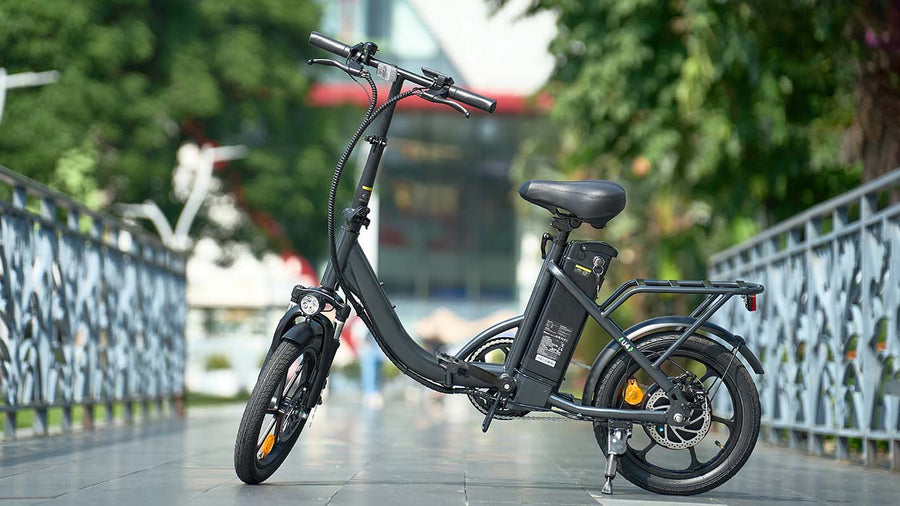
Folding e bikes: 18–22 kg — compact and portable.
-
Commuter e bikes: 23–30 kg — balanced and efficient for daily use.
-
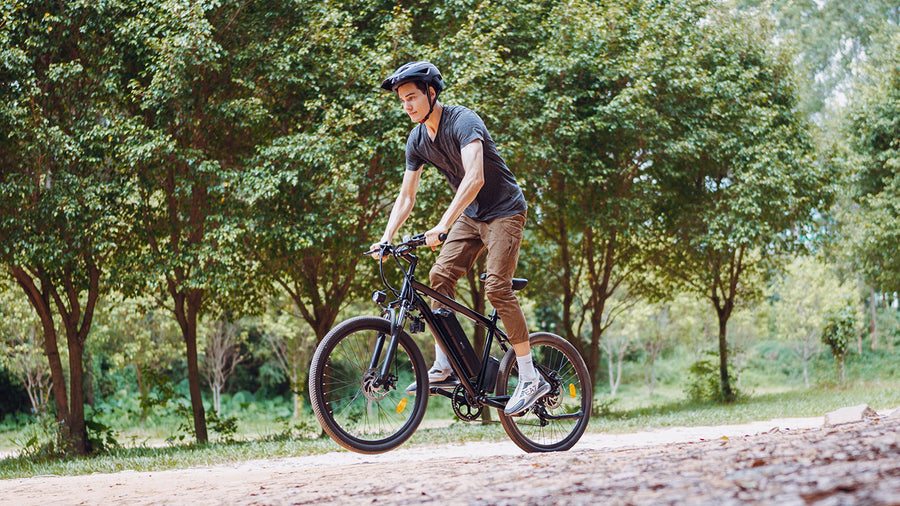
Mountain or fat tyre e bikes: 30–36+ kg — powerful for off-road or long-distance rides.
Does More Weight Mean Worse Performance?
Not necessarily. The extra weight often improves stability and control, especially at higher speeds. Plus, the motor assistance cancels out most of the heaviness — you’ll still enjoy smooth, easy pedalling even on a heavier e-bike.
Key Takeaway
Understanding how much an e bike weighs helps you choose the right model for your lifestyle.
-
Go lighter for easy carrying and quick rides.
-
Go heavier for power, endurance, and better balance.
iHoverboard e-bikes are designed to offer both — strong performance with smart, balanced weight distribution for every type of rider.
Does a Heavier or Lighter E Bike Perform Better?
When choosing an electric bike, many riders wonder: Does a heavier or lighter e bike perform better? The truth is, both have their own advantages depending on how and where you ride. Understanding this balance can help you pick the perfect model for your needs.
Advantages of a Lighter E Bike
A lighter e bike — typically weighing under 23 kg (50 lbs) — offers several practical benefits:
-
Easier to carry and lift: Perfect if you need to take your e bike upstairs, onto a train, or store it in a small space.
-
Quicker handling: Lighter bikes are more agile, making them great for city commuting or weaving through traffic.
-
Faster acceleration without motor assist: When the battery runs low, lighter bikes feel easier to pedal manually.
These benefits make lightweight models ideal for urban riders and short-distance commuters who value portability and flexibility over power.
Advantages of a Heavier E Bike
Heavier e bikes — usually 27–36 kg (60–80 lbs) — may not be as easy to carry, but they offer stronger overall performance:
-
More powerful motors: These e bikes often include larger motors that deliver more torque for climbing hills or carrying heavier loads.
-
Bigger batteries: Heavier models typically come with higher-capacity batteries, meaning longer range and better endurance on longer rides.
-
Improved balance and traction: The added weight gives the bike a lower centre of gravity, improving stability at high speeds or on rough terrain.
This makes heavier e bikes better suited for mountain rides, countryside adventures, and long-distance touring.
Finding the Right Balance
It’s not always about lighter or heavier — it’s about how the weight is distributed.
Modern designs, such as those from iHoverboard, are carefully engineered to offer the best of both worlds:
-
Well-balanced frames that maintain stability without feeling bulky.
-
Integrated batteries positioned to improve weight distribution.
-
Smart motor systems that make even a heavier bike feel effortless to ride.
The right choice depends on your lifestyle:
-
For daily commutes and portability → Choose a lighter e bike.
-
For longer rides, hills, or off-road use → Choose a heavier model with more power and range.
Key Factors That Affect E Bike Weight
When exploring how much does e bike weigh, it’s important to understand the specific components that influence its overall mass. Every part of an electric bike — from the motor to the frame — adds weight for a reason. Knowing these factors helps you choose the best model for your riding needs, whether you prefer a lightweight commuter bike or a powerful off-road machine.
1. Battery Size and Capacity
The battery is one of the heaviest parts of an e bike.
-
Larger batteries store more energy, giving you a longer riding range — but they can also add 2 to 4 kilograms or more to the total weight.
-
Smaller batteries keep the bike lighter, but reduce how far you can travel before needing to recharge.
In general, a 36V or 48V battery strikes a good balance between power and weight for daily commuting. If you plan longer trips or hilly routes, a heavier 52V or higher-capacity battery might be worth the extra kilograms.
2. Motor Type and Power
The motor also plays a big role in determining how much an e bike weighs.
-
Hub motors, usually fitted to the front or rear wheel, are lighter and simpler — ideal for city or road bikes.
-
Mid-drive motors, placed near the pedals, offer better balance and climbing ability but are heavier and more complex.
Higher-powered motors (for example, 750W or more) naturally weigh more than smaller ones. They provide stronger acceleration and torque for challenging terrain but add noticeable weight to the frame.
3. Frame Material
The frame forms the backbone of the e bike, and its material has a major effect on weight:
-
Aluminium alloy: The most common option; durable, corrosion-resistant, and relatively light.
-
Carbon fibre: Very lightweight and strong, found on premium models but more expensive.
-
Steel: Heavier but offers a smoother, more comfortable ride and excellent strength for rough use.
Modern brands like iHoverboard use advanced aluminium frames that combine lightness, rigidity, and stability, ensuring the ideal balance between performance and comfort.
4. Wheel and Tyre Size
Your wheel choice also influences how much does e bike weigh.
-
Standard road tyres are narrower and lighter, best for city streets.
-
Fat tyres, often found on off-road or all-terrain models, add several kilograms due to their wider rubber and reinforced rims.
While fat-tyre e bikes are heavier, they offer better traction and shock absorption, perfect for uneven surfaces, sand, or snow.
5. Suspension System
E bikes with front or full suspension systems weigh more than rigid-frame models because of the added shocks and linkages.
-
Suspension improves comfort and control on bumpy roads.
-
For city commuting, a front suspension fork may be enough.
-
For mountain or trail riding, dual suspension adds both weight and performance advantages.
6. Extra Components and Accessories
Additional features also contribute to total weight, including:
-
LCD display and control unit
-
Rear racks or baskets
-
Lights, mudguards, or kickstands
Each component adds a small amount, but combined, they can noticeably increase total e bike weight. If portability is a priority, look for removable or lightweight accessories.
Average E Bike Weight by Type
When considering how much does e bike weigh, it’s helpful to look at real examples. Electric bikes come in various types — folding, commuter, step-through, and mountain — each designed for different riders and purposes. The materials, motor size, and battery capacity all play a role in determining their overall weight. Below, we’ll explore the average e bike weight by type, featuring examples from iHoverboard’s versatile e-bike collection.
1. Folding Electric Bikes (Lightweight and Portable)
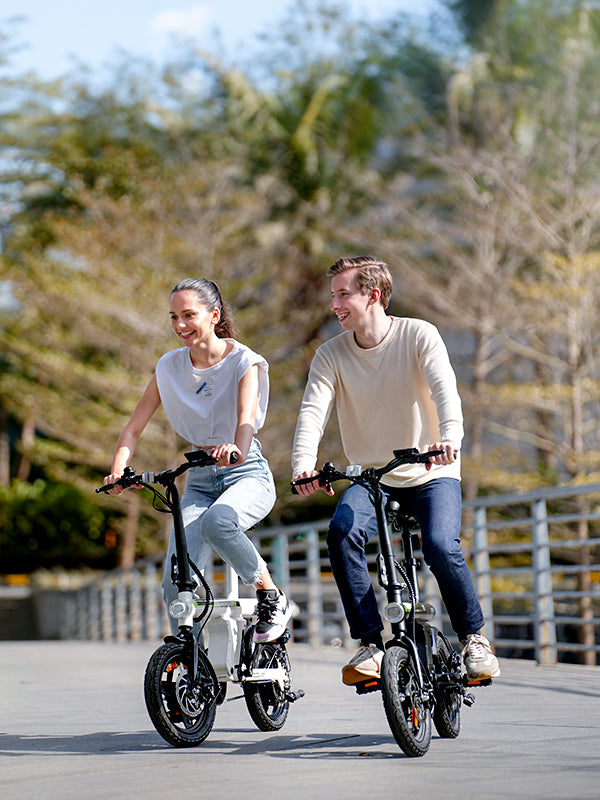
Average weight: 17–22 kg (38–48 lbs)
Folding e bikes are built for portability, making them ideal for city commuters or anyone short on storage space. Their compact frames, smaller wheels, and quick-fold designs make them easy to carry and store.
Examples from iHoverboard:
-
U1 Folding Electric Bike – 17.4 kg: One of the lightest in the range, perfect for daily commuting or short city rides. Despite its lightweight design, it features a 250W motor (peak 500W) and 36V 7.8Ah battery, offering up to 35 miles (55 km) range.
-
U4 Low Step Through Foldable Electric Bike – ~22 kg: Combines easy folding with a dual suspension system for added comfort. Its 36V 10.4Ah battery gives a longer 55-mile range, ideal for riders seeking portability and performance in one.
These models show that folding e bikes provide an excellent balance of convenience, comfort, and power without adding unnecessary weight.
2. Step-Thru and Commuter Electric Bikes (Comfort and Accessibility)
Average weight: 21–23 kg (46–51 lbs)
Step-thru and commuter bikes are perfect for everyday use — easy to mount, stable to ride, and comfortable for longer distances. Their added features such as larger batteries and wider tyres add a bit of extra weight compared to compact folding bikes.
Examples from iHoverboard:
-
U2 / U4 Step-Thru Electric Bike for Adults – 21 kg: Equipped with a 36V 10.4Ah battery and a 250W (peak 500W) motor, this model reaches up to 20 mph (32 km/h) and travels 55 miles (90 km) on a single charge. The dual suspension and step-thru frame make it perfect for urban commuting with comfort and style.
-
U4 Low Step Through Foldable Electric Bike (also fits this category): Its foldable step-thru frame makes it an ideal hybrid between portability and daily practicality.
These bikes are great for riders who prioritise accessibility, comfort, and range without sacrificing portability.
3. Mountain and All-Terrain Electric Bikes (Power and Stability)
Average weight: 20–23 kg (44–51 lbs)
Mountain and off-road e bikes are generally heavier than commuter or folding models because of their stronger frames, suspension systems, and larger motors. This added weight improves stability, especially on rough or hilly terrain.
Examples from iHoverboard:
-
EB3 / Ucity Electric Mountain Bike – 23 kg: Built for both city and trail use, with a 36V 10.4Ah battery, 7-speed Shimano gears, and front fork suspension for smooth handling. It delivers a 50-mile range, ideal for riders who enjoy exploring diverse terrains.
-
M10 / EB3 All-Terrain Electric Mountain Bike – 20.5 kg: Combines 500W (rated 250W) motor power with dual disc brakes and a front suspension fork for exceptional control and comfort. Despite its robust design, it remains lightweight for a mountain e bike.
These models show how modern e bike engineering — especially with iHoverboard — allows strong, durable frames and powerful motors without making the bike excessively heavy.
4. What These Weights Mean for You
The average e bike weight varies based on how the bike is designed to be used:
-
Lightweight (17–20 kg) → Best for city riders who carry their bikes frequently.
-
Midweight (21–23 kg) → Ideal for daily commutes and versatile road riding.
-
Heavier (23+ kg) → Great for adventure, off-road trails, and long-distance travel.
Each iHoverboard e bike is carefully designed to match its purpose — balancing performance, durability, and convenience. Whether you prefer the compact U1 for easy commuting or the powerful M10 for trail adventures, every model delivers efficient riding with a thoughtfully managed weight.
Electric Bikes from iHoverboard in Comparison
|
Feature |
|||||
| Image |  |
 |
 |
 |
 |
|
Motor Power |
250W (Peak 500W) |
250W (Peak 500W) |
250W (Peak 500W) |
250W (Peak 500W) |
500W (Rated 250W) |
|
Battery Capacity |
36V 7.8Ah |
36V 10.4Ah |
36V 10.4Ah (374.4 Wh) |
36V 10.4Ah |
36V 10.4Ah (378 Wh) |
|
Top Speed |
15.5 mph (25 km/h) |
20 mph (32 km/h) |
20 mph (32 km/h) |
20 mph (32 km/h) |
22 mph (35 km/h) |
|
Max Range |
25–35 miles (40–55 km) |
40–55 miles (64–90 km) |
35–55 miles (55–90 km) |
37–50 miles (60–80 km) |
Up to 60 miles (100 km) |
|
Wheel Size |
14″ |
20″ × 2.15″ |
16″ × 2.15″ Pneumatic |
26″ × 1.95″ |
26″ × 1.95″ Pneumatic |
|
Weight |
17.4 kg |
21 kg |
~22 kg |
23 kg |
20.5 kg |
|
Load Capacity |
120 kg |
120 kg |
120 kg |
120 kg |
150 kg |
|
Suspension |
Front Suspension |
Dual Suspension |
Dual Suspension |
Front Fork Suspension |
Front Fork Suspension |
|
Brakes |
Dual Disc Brakes |
Dual Disc Brakes |
Dual Disc Brakes |
Dual Disc Brakes |
Dual Disc Brakes |
|
Frame Type |
Foldable Alloy Frame |
Step-Thru Frame |
Low Step-Thru Foldable Frame |
Step-Over Frame |
Step-Through Alloy Frame |
|
Assist / Modes |
3 Riding Modes |
3 Riding Modes |
3+1 Modes (Electric, PAS, Manual, Walk) |
3 Modes |
3 Modes (Electric, PAS, Manual) |
|
Charging Time |
4–5 hrs |
4–5 hrs |
4–5 hrs |
5–6 hrs |
5–6 hrs |
|
Warranty |
2 Years |
2 Years |
2 Years |
2 Years |
24 Months |
|
Special Features |
Lightweight, Foldable, Compact Design |
Removable Battery, CE Certified, Comfortable Ride |
Foldable, Lightweight, BMS Protection, CE EN15194 Certified |
7-Speed Shimano, LCD Display, Strong Torque |
CE Certified, Removable Battery, Shimano 7-Speed, LCD Display |
Conclusion
Understanding how much does e bike weigh is essential when choosing the right electric bike for your lifestyle. Weight affects everything — from how easily you can carry your e bike, to how powerful it feels on the road, and how far you can travel on a single charge.
Lighter models, such as the iHoverboard U1 Folding Electric Bike, are perfect for city commuters who need portability and easy handling. Meanwhile, heavier models like the iHoverboard M10 All-Terrain Electric Bike deliver greater power, range, and stability for riders who enjoy off-road adventures or longer trips.
In short, the best e bike weight depends entirely on your needs:
-
Choose lighter if you value convenience and compact design.
-
Choose heavier if you want endurance, comfort, and strong performance.
Every iHoverboard e bike is built with the perfect balance of power, weight, and reliability — ensuring a smooth, safe, and enjoyable ride no matter where your journey takes you.





Still, need help? Contact Us: support@ihoverboard.com
What's the option? Check out the option now!
Leave us a message