


















![How Fast Can a Treadmill Go [Complete Guide for All Levels]](http://www.ihoverboard.co.uk/cdn/shop/articles/JT31size_0b0ef00f-c52d-494d-b6e7-1e3f72b051d2_{width}x.jpg?v=1773196485)
How Fast Can a Treadmill Go [Complete Guide for All Levels]
How Fast Can a Treadmill Go [Complete Guide for All Levels]
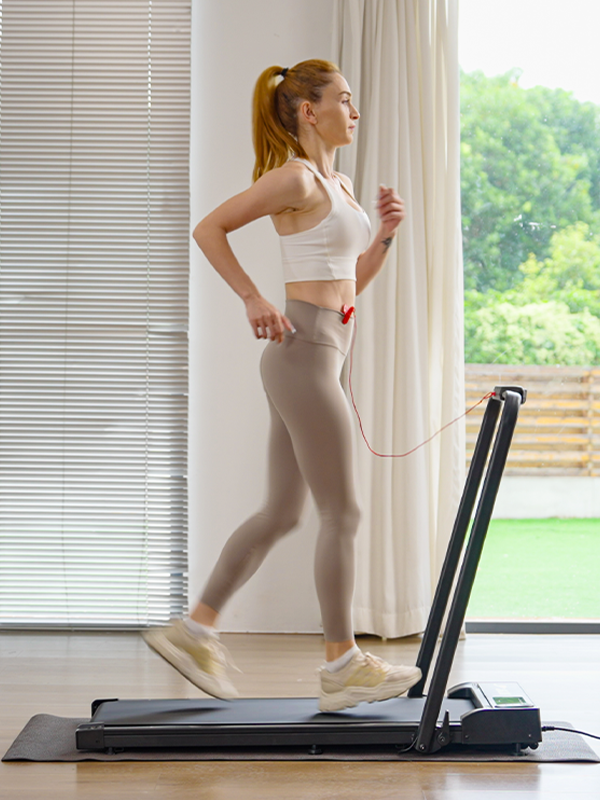
When it comes to indoor fitness, treadmills are a versatile and convenient way to walk, jog, or run regardless of the weather. Many users wonder, how fast can a treadmill go, and the answer depends on the model, motor power, and intended use. From entry-level walking pads to high-performance machines, treadmill speeds vary widely to match different fitness levels and goals. This complete guide explains speed ranges for all types of treadmills and helps you choose the right pace for your workouts.
How Fast Can a Treadmill Go on Entry-Level Models?
When people search how fast can a treadmill go, entry-level treadmills are often the best place to start. These models are designed for home and office use, focusing on walking, light jogging, and beginner-friendly running speeds. To make this easier to browse, here’s a clear breakdown of what to expect.
Typical Speed Range on Entry-Level Treadmills
-
Walking speeds: 1–4 km/h
-
Fast walking / light jogging: 5–6 km/h
-
Beginner running (select models): up to 12 km/h (around 7.5 mph)
This range covers most daily fitness needs without overwhelming new users.
Walking Pads: Best for Low-Impact Movement
Entry-level walking pads usually focus on walking rather than running.
-
Maximum speed: up to 6 km/h
-
Ideal for under-desk use, home walking, and recovery workouts
-
Great for users who want to stay active throughout the day
These models clearly show how fast a treadmill can go when designed for walking-first fitness.
2-in-1 Entry-Level Treadmills: Walk, Jog, and Run
2-in-1 folding treadmills offer more flexibility.
-
Walking mode: 1–6 km/h
-
Jogging and running mode: up to 6.2 mph or 12 km/h
-
Suitable for beginners who want to progress over time
This makes them a popular choice for home users who want more than just walking.
Why Entry-Level Treadmills Have Speed Limits
-
Designed with quiet, efficient motors
-
Built for daily use, not continuous high-speed sprinting
-
Safer for beginners and joint-friendly workouts
Speed limits help maintain stability, durability, and long-term performance.
Who Entry-Level Treadmills Are Best For
-
Beginners starting their fitness journey
-
Home and office users with limited space
-
People focused on walking, light jogging, or weight management
In summary, how fast can a treadmill go on entry-level models depends on its design. Most offer walking speeds up to 6 km/h, while versatile entry-level treadmills can reach 12 km/h for light running. This makes them a practical, accessible option for maintaining fitness at home without unnecessary complexity.
How Fast Can a Treadmill Go on Mid-Range Models?
When people search how fast can a treadmill go, understanding the differences between entry-level and mid-range models is important—especially if you’re ready to move beyond basic walking and light jogging. Mid-range treadmills are designed for users who want greater speed, enhanced performance, and more robust features while still staying within a home or personal fitness setting.
Here’s a detailed look at how fast a treadmill can go in this category.
Typical Speed Range of Mid-Range Treadmills
Mid-range treadmills generally offer a wider and higher speed range compared to entry-level models. On average, these machines can reach:
-
Jogging speeds: 6–8 mph (9.7–12.9 km/h)
-
Running speeds: Up to 10–12 mph (16–19.3 km/h)
This means a mid-range treadmill can accommodate:
-
Walking and brisk walking
-
Light jogging and steady runs
-
Interval training sessions
-
Beginner and intermediate running workouts
By contrast, many entry-level treadmills peak at around 6–7.5 mph, so mid-range models open up more advanced cardio options that support fitness progression.
What Enables Higher Speed on Mid-Range Treadmills
Mid-range treadmills can go faster for several reasons:
1. Stronger Motors
Mid-range treadmills are equipped with motors designed to sustain higher continuous power, allowing the belt to move faster for longer periods without overheating. This is essential when running at speeds over 8 mph.
2. Better Construction and Shock Absorption
They typically feature improved frames, better shock absorption systems, and wider belts—giving runners more stability at faster speeds. This means you can feel confident even when pushing your speed during workouts.
3. Enhanced Controls and Programs
Mid-range treadmills often include:
-
Adjustable incline
-
Pre-set training programs
-
Speed controls with finer increments
These features allow users to fine-tune their workout intensity and transition smoothly between walking, jogging, and running.
Everyday Users Who Benefit From Mid-Range Speeds
If you’re asking how fast can a treadmill go because you want to advance your workouts, mid-range models are a valuable upgrade. They work well for:
-
Joggers moving toward running
-
Fitness enthusiasts building endurance
-
Users integrating speed intervals
-
People training for 5K races or fitness goals
With speeds up to 12 mph or more, these treadmills support both aerobic conditioning and higher-intensity training.
How to Choose the Right Speed on Mid-Range Treadmills
Deciding how fast a treadmill should go depends on your goals:
-
Warm-ups and recovery walks: 3–5 mph (4.8–8 km/h)
-
Steady jog: 5–7 mph (8–11.3 km/h)
-
Moderate run: 7–9 mph (11.3–14.5 km/h)
-
Speed intervals / sprint bursts: 9–12 mph (14.5–19.3 km/h)
This flexibility means you can structure workouts for weight loss, endurance, or performance—all on the same machine.
In summary, mid-range treadmills offer a significantly higher speed capability than basic models, usually topping out between 10 and 12 mph, while still maintaining comfort, quiet operation, and reliable performance. This makes them ideal for users who want to push beyond casual walking and jogging and explore more advanced fitness routines without stepping into a commercial gym.
How Fast Can a Treadmill Go on Advanced and Performance Models?
When users ask how fast can a treadmill go, advanced and performance models represent the upper echelon of treadmill speed and capability. These treadmills are engineered for serious runners, high-intensity workouts, athletic training, and long-term performance progression. They offer greater power, stability, and speed ranges far beyond basic walking or jogging machines.
Here’s a detailed breakdown of what to expect and why these models can go faster.
Typical Speed Range of Advanced and Performance Treadmills
Advanced and performance treadmill models can typically reach speeds of:
-
Running speeds: 12–15 mph (19.3–24.1 km/h)
-
Sprint capable speeds: Some elite models can exceed 15 mph (24.1 km/h)
These speeds are suitable for:
-
High-intensity interval training (HIIT)
-
Sprint training
-
Marathon conditioning
-
Training for competitive races
When searching how fast can a treadmill go, this category represents the highest practical speeds designed for sustained, powerful running.
What Enables Higher Speeds on Performance Treadmills
Advanced treadmills offer higher speed capabilities thanks to several key engineering features:
1. High-Power Motors
Performance models use robust motors with higher continuous horsepower (CHP). This allows the treadmill belt to maintain fast speeds without strain or overheating. Stronger motors also provide smoother acceleration and stability at speed.
2. Reinforced Frame and Wider Belt
A reinforced steel frame and wider running belt create a stable platform for fast running. A broader belt reduces the risk of missteps or accidental slips when running at high speeds, making the machine safer and more confidence-inspiring.
3. Enhanced Shock Absorption
Advanced shock-absorbing systems minimise impact on joints even at high speeds. This is critical for runners who log longer or faster sessions, helping reduce fatigue and injury risk.
4. Precision Controls and Training Programs
Performance treadmills often include:
-
Fine-tuned speed controls, often in 0.1 mph increments
-
Interval and custom training programs
-
Performance tracking features
These allow users to push speed thresholds and follow structured training plans.
How Advanced Speeds Support Fitness Goals
If your goal is to improve running performance, endurance, or competitive speed, advanced treadmill models offer the following benefits:
-
Sprint Interval Training: Running at 12–15+ mph allows short bursts of sprinting that dramatically improve cardiovascular capacity.
-
Race Preparation: Speeds above 10 mph simulate real-world race paces for distances like 5K and 10K events.
-
Performance Plateau Breaking: Higher top speeds help experienced runners break through training plateaus.
Who Benefits Most From High-Speed Treadmills
Advanced and performance treadmills are best for:
-
Experienced runners
-
Athletes in training
-
Fitness enthusiasts seeking HIIT and sprint workouts
-
Users training for events like 10Ks, half marathons, or marathons
For these groups, understanding how fast a treadmill can go directly impacts workout quality and progress.
Practical Use Tips for High Speeds
When using high-speed treadmills, keep these tips in mind:
-
Warm up thoroughly: Start with lower speeds (3–6 mph) to prepare muscles and joints.
-
Use safety features: Always attach the safety clip and use handrails during early high-speed sessions.
-
Increase speed gradually: Avoid large jumps in speed to reduce injury risk.
-
Mix speed and incline: Alternating speed with incline can improve conditioning without excessive top-end running.
In conclusion, advanced and performance treadmill models answer the question how fast can a treadmill go with top speeds ranging from 12 to 15 mph or more. These machines are engineered for durability, precision, and the most demanding training goals — making them ideal for runners and athletes who want to train at competitive or sprint-level speeds.
How Fast Can a Treadmill Go: Home Use vs Commercial Use
When considering how fast a treadmill can go, it is important to understand the difference between home-use and commercial-use treadmills. While both can support walking and running, they are built for different training demands and usage levels.
Home-Use Treadmills
Home-use treadmills are designed for personal workouts, quiet operation, and limited space. Most home treadmills can reach speeds of 6 to 12 mph (10 to 19 km/h), which is more than enough for walking, jogging, steady running, and interval training.
These treadmills are ideal for:
-
Daily walking and jogging
-
Moderate running workouts
-
Weight loss and general fitness
Their motors and frames are built to handle regular use but are not intended for continuous high-speed training throughout the day.
Commercial-Use Treadmills
Commercial treadmills are built for gyms and high-traffic environments where machines are used for many hours each day. Because of their heavy-duty construction, they can usually reach higher speeds of 12 to 15 mph or more (19 to 24+ km/h).
They are designed for:
-
Advanced runners
-
High-intensity and sprint training
-
Frequent, back-to-back workouts
Stronger motors, larger running decks, and enhanced shock absorption allow commercial treadmills to maintain higher speeds safely and consistently.
Key Differences in Speed Capability
-
Home treadmills: Best suited for speeds up to 10–12 mph
-
Commercial treadmills: Designed to handle sustained speeds of 12–15+ mph
Final Comparison
In summary, how fast a treadmill can go depends largely on its intended use. Home-use treadmills provide enough speed for most fitness goals, while commercial treadmills are built for higher-speed performance and heavy daily use. Choosing the right option depends on your running experience, training intensity, and workout frequency.
How Fast Can a Manual Treadmill Go?
Manual treadmills are different from motorised models because the belt only moves when you push it with your legs. This means the speed is entirely controlled by the user—there’s no motor to set a top speed.
Most users typically walk at 2–4 mph (3–6 km/h) or jog at 4–6 mph (6–10 km/h). While sprinting is possible, it requires significant effort and is difficult to maintain for long periods.
Manual treadmills also engage more muscles, particularly in the legs and core, because you are powering the belt yourself. This added effort makes even moderate speeds feel more challenging compared to a motorised treadmill.
These treadmills are best suited for walking, low-impact cardio, and endurance workouts. They provide a simple, space-saving, and effective option for steady exercise, although they are not ideal for users looking for high-speed running or sprint training.
In short, how fast a manual treadmill can go depends on your strength, stamina, and workout intensity, giving you full control over the pace.
What Treadmill Speed Is Right for You?
When asking how fast can a treadmill go, the answer depends largely on your fitness level, goals, and the type of treadmill you’re using. Choosing the right speed is essential for safety, effectiveness, and long-term progress.
Beginners: Walking and Light Jogging
If you are new to treadmill workouts, start slow to build endurance and prevent injury.
-
Recommended speed: 2–4 mph (3–6 km/h)
-
Purpose: Comfortable walking, warm-ups, or recovery sessions
-
Tip: You should be able to maintain a conversation without gasping for air. This ensures you are exercising at a moderate intensity suitable for beginners.
Entry-level treadmills, such as compact walking pads, are ideal for this group. They provide a safe, low-impact introduction to treadmill exercise while allowing gradual progression in speed.
Intermediate Users: Jogging and Moderate Running
If you have some treadmill experience and want to improve cardiovascular fitness, a moderate speed is appropriate.
-
Recommended speed: 5–8 mph (8–13 km/h)
-
Purpose: Steady jogging, light running, or interval workouts
-
Tip: Alternate between jogging and brisk walking to gradually increase stamina. Mid-range treadmills are perfect for this, as they offer higher speed ranges and better stability for running.
This speed range allows you to challenge your fitness without overexertion, making it ideal for weight loss, endurance building, and general fitness improvement.
Advanced Users: Running and Sprint Training
Experienced runners and fitness enthusiasts often require higher speeds to reach performance goals.
-
Recommended speed: 9–12+ mph (14–19 km/h)
-
Purpose: Running, high-intensity interval training (HIIT), and sprint workouts
-
Tip: Use proper warm-up and cool-down sessions, and consider a treadmill with strong motors, wide belts, and good shock absorption for safety at high speeds.
Advanced and performance treadmills are designed for these users, providing stability, enhanced motor power, and precise speed control to support sprinting and marathon-style training.
Matching Speed to Your Goals
-
Weight loss: Use moderate speeds with intervals of brisk walking or jogging to maximize calorie burn.
-
Endurance: Maintain steady running speeds over longer sessions to build stamina.
-
Performance: Incorporate higher speeds and sprints for interval training and speed development.
Final Tips
-
Increase speed gradually: Avoid sudden jumps in pace to prevent injury.
-
Listen to your body: If you feel strained or lose balance, reduce speed.
-
Consider incline: Adding a slight incline can increase intensity without requiring higher speeds.
Understanding what treadmill speed is right for you ensures that your workouts are effective, safe, and aligned with your fitness goals—whether you’re walking, jogging, or running at high intensity.
Conclusion
Understanding how fast a treadmill can go is essential for choosing the right machine and getting the most out of your workouts. Treadmill speeds vary depending on the model, from entry-level walking pads with top speeds around 6 km/h, to advanced performance treadmills capable of 12–15 mph or more. Manual treadmills offer user-controlled speeds, making them ideal for walking and light jogging, while mid-range and high-end models support running, interval training, and sprint workouts.
Choosing the right speed depends on your fitness level, goals, and treadmill type. Beginners should start with slow walking or light jogging, intermediate users can progress to moderate running, and advanced users can safely challenge themselves with higher speeds and sprints. Matching speed to your needs ensures effective, safe, and enjoyable treadmill workouts.
By understanding your options and aligning treadmill speed with your goals, you can maximize performance, build endurance, and achieve consistent fitness results at home or in a gym setting.
FAQs
How fast can a human run on a treadmill?
The speed a human can run on a treadmill depends on fitness level, experience, and training. For most recreational runners, speeds of 6–10 mph (10–16 km/h) are achievable. Advanced runners or athletes can reach 12–15 mph (19–24 km/h) for sprints, while elite sprinters may exceed 20 mph for very short bursts. On manual treadmills, speed is limited by the runner’s own strength and stamina.
How fast is 7.0 on a treadmill?
A treadmill speed setting of 7.0 typically corresponds to 7 miles per hour (mph), which is roughly 11.3 km/h. This speed is considered a moderate run or fast jog for most users. It’s suitable for experienced beginners or intermediate runners who want to build endurance or perform interval workouts.
Is 200 bpm on a treadmill okay?
A heart rate of 200 beats per minute (bpm) is very high for most adults and usually occurs only during maximum-intensity exercise. Whether it’s safe depends on age, fitness level, and medical history. For example, for a 30-year-old, the estimated maximum heart rate is around 190 bpm. Sustaining 200 bpm is generally not recommended unless under supervision or for short sprint intervals. Always consult a healthcare professional if unsure.
How fast do typical treadmills go?
Typical home treadmills reach speeds of 6–12 mph (10–19 km/h). Entry-level models usually top out around 6–8 mph, mid-range treadmills can go up to 10–12 mph, and high-end or commercial models may reach 15 mph or more (24 km/h). Manual treadmills vary depending on user effort, generally staying in the walking or light jogging range.






Still, need help? Contact Us: support@ihoverboard.com
What's the option? Check out the option now!
Leave us a message