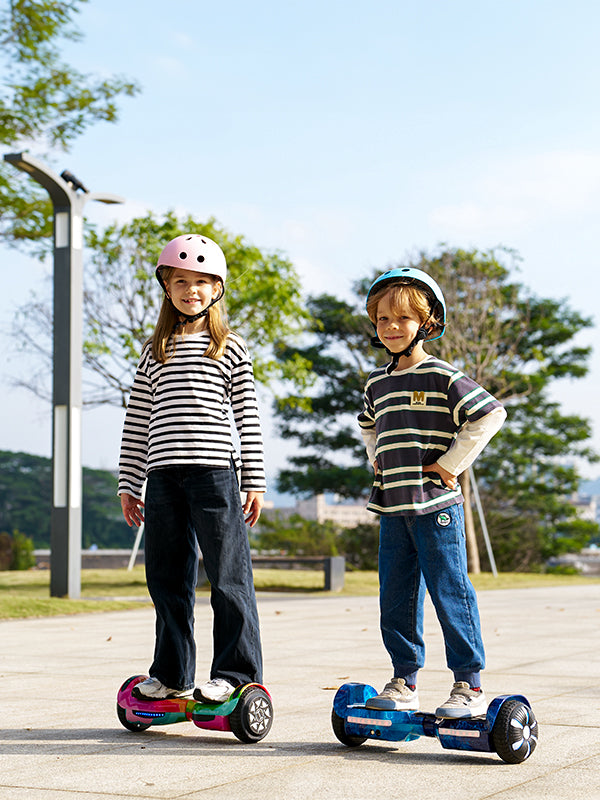
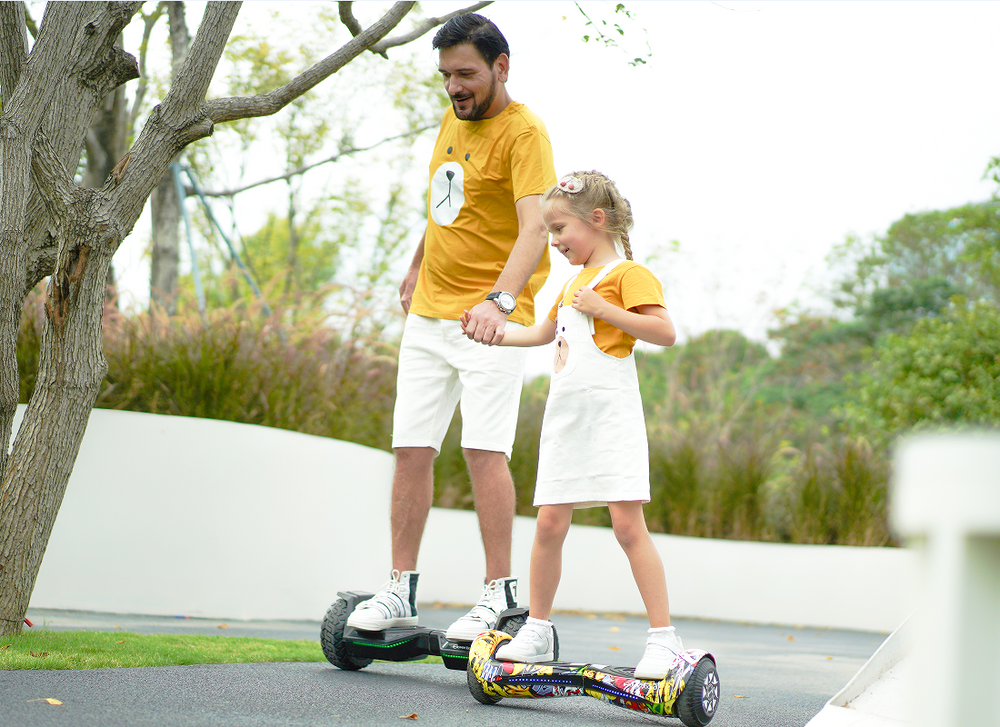
Hoverboards have become one of the most exciting outdoor toys for children, combining balance, motion, and outdoor play into an unforgettable riding experience. However, when shopping for a hoverboard for kids, parents are often faced with endless choices, technical specifications, and safety questions. From determining the official hoverboard recommended age to picking between different wheel sizes, finding the right self-balancing board requires careful consideration of your child's physical development, coordination, and confidence levels. A lightweight kiddie hoverboard designed for a young beginner operates very differently than an all-terrain model built for older teenagers. In this comprehensive buyer’s guide, we break down age safety benchmarks, essential speed limiters and anti-slip features, 6.5 hoverboards for beginners like the iHoverboard H1 and H2 series, and vital helmet guidelines to help you select safe hoverboards for kids.
What Age Is Safe to Start Riding a Self-Balancing Board?
Determining the ideal hoverboard recommended age is one of the most critical first steps for any parent. Most manufacturers, pediatric safety experts, and mobility engineers agree that children should generally be at least 6 to 8 years old before riding a two-wheeled self-balancing board.
While every child develops at their own pace, key physical milestones determine whether your child is ready for a hoverboard:
-
Weight Thresholds: Self-balancing scooters utilize pressure-sensitive gyroscopic footpads to detect a rider’s movement. Most boards require a minimum weight of around 20 kg (44 lbs) to engage the internal sensors safely. If a child is too light, the board may shudder or fail to calibrate properly.
-
Core Balance and Coordination: Children reaching hoverboard age 8 typically possess the motor control, balance, and quick reflexes required to step on and off the board without losing balance.
-
Hazard Awareness: Young riders need the cognitive maturity to anticipate obstacles, avoid sudden turns near curbs, and obey parental safety boundaries while riding outdoors.
For children under 6 years old, a traditional three-wheeled manual scooter or a low-speed ride-on toy is generally recommended. Once a child reaches age 6 to 8 and meets the minimum weight threshold, starting on an entry-level kiddie hoverboard provides a fun, confidence-building experience.
Why Speed Limiters and Non-Slip Footpads Are Essential
When searching for the best hoverboard for kids, safety features should always take priority over maximum speed or flashy cosmetics. Today’s safe hoverboards for kids incorporate intelligent engineering designed specifically to prevent sudden wobbles, uncontrolled acceleration, and accidental slips.
Two non-negotiable safety features every parent should look for include:
1. Beginner Speed Limiters and Smart Sensors
High-speed hoverboards built for adults can reach speeds of 10 to 12 mph (16 to 19 km/h), which is far too fast for a young child learning to balance. Children's hoverboards feature internal speed limiters or beginner training modes that cap top speeds at a manageable 6 to 7.5 mph (10 to 12 km/h). Additionally, advanced auto-balancing technology keeps the deck completely horizontal the moment the board powers on, making mounting and dismounting smooth and predictable.
2. High-Traction Non-Slip Footpads
Foot placement plays a massive role in hoverboard steering. Quality models utilize thick, textured rubber pads that grip the soles of children’s sneakers. These non-slip pads prevent feet from sliding during sharp turns, dampening road vibrations and keeping the rider firmly anchored to the deck.
|
Safety Feature
|
Function
|
Parent Benefit
|
|
Speed Governor / Limiter
|
Caps maximum speed to 6–7.5 mph
|
Prevents runaway speed and severe falls
|
|
Auto-Balancing Gyroscope
|
Locks the deck flat upon powering on
|
Makes mounting and dismounting intuitive
|
|
Textured Rubber Footpads
|
Provides deep shoe traction across pads
|
Prevents slipping during sudden turns or stops
|
|
UL2272 Electrical Certification
|
Rigorously tests battery and charging systems
|
Guarantees electrical and fire safety
|
Investing in a model equipped with these protective features ensures your child learns to ride comfortably within safe speed boundaries.
Comparing 6.5-Inch Compact Models for First-Time Young Riders
When selecting a first board, wheel diameter is the single most important hardware decision. While 8.5-inch and 10-inch off-road wheels are great for thick grass and rough terrain, 6.5 hoverboards for beginners are widely considered the gold standard for children aged 6 to 10.
Compact 6.5-inch solid rubber tires keep the deck low to the ground, giving young riders a low center of gravity that makes balancing effortless. Two of the most popular starter choices in the hoverboard for kids collection include the iHoverboard H1 and the iHoverboard H2.
iHoverboard H1 vs. iHoverboard H2 Comparison
-
iHoverboard H1: Designed as the ultimate starter board, the iHoverboard H1 Hoverboard features an ultra-lightweight frame, smooth dual motors, and vibrant LED wheel lights. Its compact deck dimensions make it remarkably easy for younger kids to carry and maneuver on paved driveways or smooth indoor surfaces.
-
iHoverboard H2: Offering a step up in styling and ambient lighting, the iHoverboard H2 Hoverboard pairs 6.5-inch puncture-proof solid tires with integrated Bluetooth speakers and colorful deck light paths. It provides the same stable, beginner-friendly geometry as the H1 while adding extra entertainment features for older kids.
|
Model Feature
|
iHoverboard H1
|
iHoverboard H2
|
|
Wheel Size
|
6.5-Inch Solid Rubber
|
6.5-Inch Solid Rubber
|
|
Target Rider Age
|
Ages 6 to 9
|
Ages 7 to 12
|
|
Top Speed
|
~6.2 mph (10 km/h)
|
~7.5 mph (12 km/h)
|
|
Special Highlights
|
Lightweight frame, bright LED wheels
|
Built-in Bluetooth speaker, LED deck trim
|
|
Riding Surface
|
Smooth asphalt, concrete, indoors
|
Driveways, sidewalks, flat park paths
|
Both 6.5-inch models deliver the ideal balance of agility, controlled speed, and ground clearance for first-time riders.
Essential Helmet and Safety Gear Guidelines for Parents
Even on a low-speed kiddie hoverboard, protective safety equipment is essential for every ride. Falls most commonly occur during the first few days of learning, particularly when a child is mastering how to step off the board backward or execute tight turns.
Before letting your child ride, equip them with the following standard protective gear:
-
CPSC-Certified Multi-Sport Helmet: Ensure the helmet fits snugly across the forehead, sitting roughly two finger-widths above the eyebrows. A bicycle or skateboard helmet certified to CPSC standards protects against head impacts.
-
Wrist Guards: Wrist injuries are among the most common hoverboard accidents because beginners instinctively extend their hands during a loss of balance. Rigid wrist guards absorb impact and support the joint.
-
Knee and Elbow Pads: High-density foam pads with hard plastic shells protect joints from scrapes and bruises when riding on hard concrete or asphalt.
-
Proper Footwear: Children should always wear closed-toe sneakers with rubber soles. Never allow kids to ride barefoot, in sandals, or in loose slip-on shoes.
Establish clear ground rules from day one: riding should be restricted to flat, dry surfaces away from vehicular traffic, steep hills, and wet pavement.
Conclusion
Choosing the right hoverboard for kids comes down to matching your child’s age, weight, and confidence level with the appropriate board specifications. For most young beginners aged 6 to 10, a compact 6.5-inch model like the iHoverboard H1 or H2 offers the perfect combination of stability, manageable speeds, and responsive control. By prioritizing built-in safety features like speed limiters, auto-balancing gyroscopes, and non-slip footpads—and pairing them with a quality helmet and protective pads—you can give your child a thrilling outdoor activity that builds balance and coordination. Ready to find your child's perfect ride? Explore our full collection of safe hoverboards for kids today!
Frequently Asked Questions
At what age can a child safely start riding a hoverboard?
Most safety guidelines recommend that children be at least 6 to 8 years old before riding a hoverboard. Children should meet the board's minimum weight requirement (typically around 20 kg / 44 lbs) to ensure the gyroscopic footpads respond accurately to their movements.
Do kids' hoverboards include beginner speed limiter modes?
Yes, high-quality children's hoverboards come equipped with internal speed limiters or automatic training governors that restrict top speeds to a safe 6 to 7.5 mph (10 to 12 km/h), allowing young riders to master balance without accelerating too quickly.
What tire size is best for a beginner child hoverboard?
Compact 6.5-inch solid rubber tires are best for beginner children. They sit close to the ground, provide a low center of gravity for easy balancing, and never go flat, making them ideal for smooth sidewalks, driveways, and indoor play.























Still, need help? Contact Us: support@ihoverboard.com
What's the option? Check out the option now!
Leave us a message