




















How to Reduce Treadmill & Walking Pad Noise in Upstairs Flats
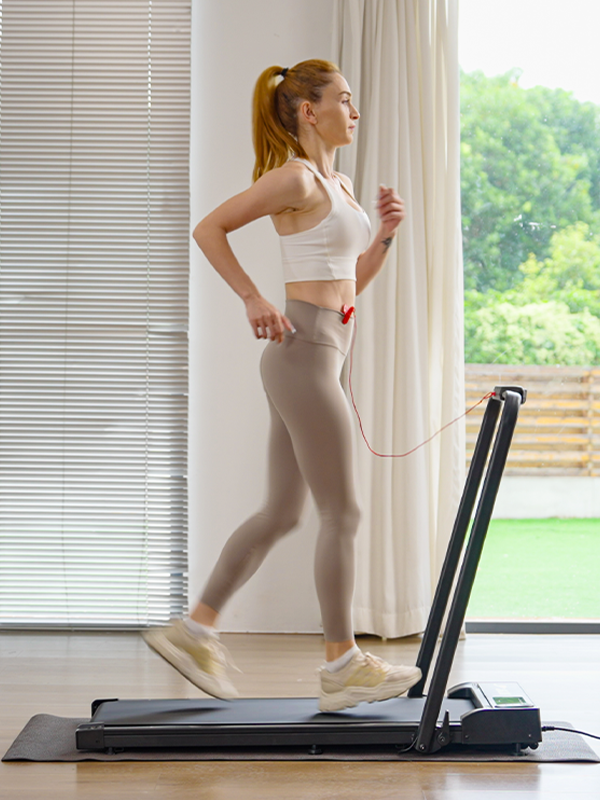
Operating home fitness equipment in a multi-story apartment or converted UK flat presents a common acoustic challenge: preventing motor hum and impact vibration from disturbing neighbors below. Because timber floor joists and laminate flooring act as natural amplifiers for kinetic force, learning how to reduce treadmill noise upstairs flat environments require is essential for maintaining peace and staying active. This practical noise-proofing guide details vibration dampening mats, mechanical belt maintenance, decoupling tactics, and equipment selection to create an ultra-quiet workout area. Fitness equipment generates two distinct types of acoustic transfer into lower levels: Standard subflooring easily transfers structure-borne vibration unless the machine is mechanically decoupled from the floor surface. Implementing effective under desk walking pad noise reduction requires addressing both airborne motor hum and physical impact shock. Placing a compact walking pad directly on bare laminate, hardwood, or thin carpet allows every step to vibrate the floorboards. Investing in a dedicated treadmill shock absorbing mat or isolation pads absorbs kinetic energy before it reaches the subfloor. Mat / Pad Material Thickness Impact Isolation Level Best Use Case High-Density Recycled Rubber 10 mm – 15 mm High to Extreme Primary acoustic barrier for heavy treadmills & high-speed walking Heavy-Duty Rubber Vibration Pad Sets 15 mm – 20 mm Extreme (Point-source dampening) Placed directly under frame feet/rollers to isolate motor vibration Closed-Cell EVA Foam Tiles 12 mm Moderate Secondary layer under walking pads on carpeted floors Standard PVC Exercise Mats 4 mm – 6 mm Low (Surface protection only) Prevents floor scratches; ineffective against deep floor vibration For a quiet walking pad for flats, layering a high-density rubber mat over a secondary sound-dampening rug provides double-stage acoustic dampening, effectively neutralizing both high-frequency motor noise and low-frequency heel impacts. Mechanical friction between the underside of the running belt and the deck board causes motor strain, increasing operating noise and creating annoying high-pitched squeaks. Where and how you position your equipment inside an apartment dramatically influences walking pad soundproofing apartment effectiveness. To understand the health, energy, and convenience benefits of incorporating low-impact walking equipment into your home office, evaluate whether are walking pads worth it discover the benefits for home fitness. Hardware engineering plays a primary role in baseline operational noise levels. Selecting a machine designed specifically for a quiet walking pad setup ensures long-term apartment compatibility. To compare low-decibel, high-performance models engineered for flat living, check out our top picks for the best home walking pad. A thick foam mat reduces surface noise and light vibrations, but soft foam can compress fully under foot impact, allowing kinetic force to reach the floorboards. For maximum vibration absorption in upstairs flats, a high-density solid rubber mat (10mm+) or specialized rubber vibration pads work significantly better than soft foam. A quiet under-desk walking pad equipped with a modern brushless motor generates between 40 and 50 decibels (dB) during normal walking speeds (1 to 4 km/h). This volume level is equivalent to a quiet library or a running household refrigerator, keeping motor hum unnoticed in neighboring rooms. A walking pad belt typically squeaks due to friction caused by a dry deck board, incorrect belt alignment rubbing against side guards, or an uneven frame wobbling against the floor. Applying 100% silicone belt lubricant under the belt and centering the running deck usually eliminates squeaking immediately.
Why Treadmills and Walking Pads Create Noise in Flats
Essential Shock-Absorbing Mats and Rubber Floor Protectors
Belt Lubrication and Alignment to Eliminate Squeaks
Positioning Tips: Decoupling Equipment from Wooden Subfloors
Choosing Ultra-Quiet Walking Pads with Brushless Motors
Frequently Asked Questions
Will a thick foam mat stop walking pad vibrations downstairs?
How many decibels does a quiet under-desk walking pad make?
Why is my walking pad belt squeaking while I walk?







Still, need help? Contact Us: support@ihoverboard.com
What's the option? Check out the option now!
Leave us a message